Adults sharing a bedroom often notice that one person’s preference for quiet reading clashes with another’s habit of listening to low-volume audio before settling. Rather than seeking a single ideal setup, the useful step is to compare specific options for lighting, storage and movement paths against the actual dimensions and furniture already in place.
These comparisons begin with listing the items each person needs within arm’s reach and noting how frequently they are used. The exercise reveals whether a single nightstand can serve both routines or whether separate small surfaces reduce the need to cross the room after the other person has settled.
Identifying the main points of difference
Start by writing down the sequence each person follows once they enter the bedroom. One sequence may involve selecting a book from a shelf, adjusting a bedside lamp and placing glasses on a surface. The other may involve plugging in earphones, locating a charging cable and setting an alarm on a phone. Placing these steps side by side shows which actions overlap and which can be separated by a few centimetres of repositioned furniture.
Measure the floor space between the bed and any wardrobe or chest of drawers. If the gap is less than sixty centimetres, moving a chair or adding a narrow shelf on the opposite side of the bed may create clearer routes without blocking access to stored bedding.
Lighting choices and their practical effects
Compare a single adjustable lamp with two smaller lamps on separate surfaces. The single lamp requires one person to reach across or stand up to change the angle, while separate lamps allow each side to be switched independently. Check the height of existing bedside surfaces against the height of the bed to ensure the light falls on reading material without shining directly into the other person’s eyes.
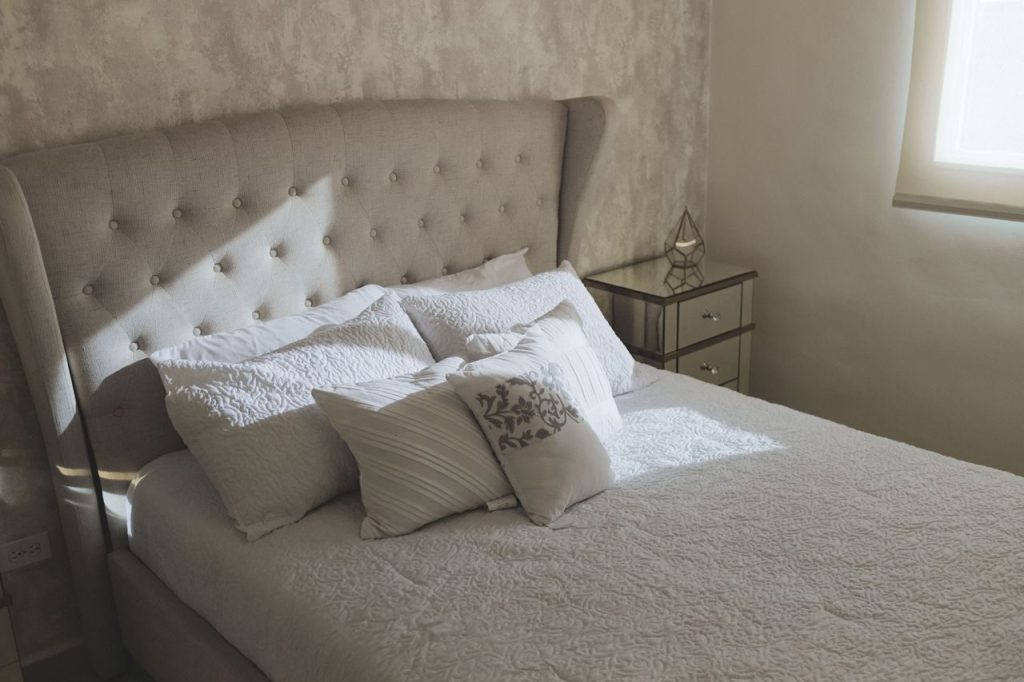
Consider the position of wall sockets. If both lamps must share one socket, decide whether an extension lead with a switch at the bed is preferable to moving furniture closer to the existing outlet. Record the length of cable needed so any addition stays within safe reach and does not cross walking paths.
Storage for items used at different times
Compare open trays versus small drawers or baskets for glasses, books and charging cables. An open tray allows quick location of an item but may collect dust; a drawer hides items yet requires an extra movement to open it. Test both options by placing the same set of objects in each and noting how many seconds each method adds to the evening sequence.
Check whether the chosen storage fits within the existing footprint of the nightstand or whether it overhangs and reduces floor clearance. If the bedroom is narrow, a wall-mounted shelf above one side of the bed can free surface space without narrowing the walkway.
Sound and movement considerations
When one person uses audio and the other does not, compare placing a small speaker on a shelf rather than on the bed itself. The shelf position keeps the device stable and reduces the chance of accidental contact during the night. Measure the distance from the shelf to the nearest socket and confirm that any cable can be secured along the skirting board.
Observe how often each person stands up after the other has settled. If one routine involves retrieving an item from across the room, consider whether a second, smaller surface on that side of the bed would remove the need to cross the floor repeatedly.

Reviewing the layout against existing furniture
Place the bed, nightstands and any additional storage in their intended positions and walk the route each person takes. Note any tight turns or items that must be moved aside. If the wardrobe doors open into the main walkway, compare leaving them slightly ajar in the evening versus rearranging the order of furniture so the doors swing away from the bed.
Record the measurements of each piece of furniture on a simple diagram. This allows later checks when considering a new item such as an additional shelf or a different style of lamp without relying on memory alone.
Adjusting over weeks rather than in one session
After initial changes, note for a few evenings which adjustments feel neutral and which still require extra steps. Small shifts such as moving a lamp ten centimetres or swapping a tray for a shallow basket can be tested one at a time. Keep the earlier list of sequences handy so each trial can be compared against the original order.
When both people have recorded their observations, discuss which elements remain useful and which can be reversed. The comparison stays focused on the specific bedroom dimensions and the two routines rather than on general recommendations.
Maintaining a record for future reference
Store the measurements, socket locations and sequence notes in one folder with any care instructions for the bedding already in use. When furniture is rearranged or a new item is considered, the same list provides a quick reference for checking compatibility with existing space and routines. This approach keeps the process repeatable without requiring repeated measurement from scratch.