

Bedroom lighting serves several different tasks. Someone may need to read, find clothes, enter quietly or move to the bathroom. Treating all of those needs as one question about brightness can lead to an arrangement that suits none of them particularly well. Start by identifying the task, the person doing it and the part of the room where it happens.
Make a small inventory of the lights and controls already available. Include light entering through a doorway or window and the way that existing curtains or blinds operate. This gives you a practical basis for comparison. A new product should solve an identified problem rather than introduce another control nobody can reach conveniently from the place where it is needed.
Match each light to a task
List the activities that require light and where they take place. Reading at one side of the bed is different from choosing clothes near a wardrobe. Think about the direction of the light as well as whether the task is visible. In a shared room, ask the other person which part of an arrangement affects them rather than assuming that both people experience the same lamp in the same way.
Use the task list to assess existing equipment first. Moving an appropriate lamp or changing where an activity happens may be enough. Follow the instructions for the equipment and keep it in a suitable position. If an installation or fitting requires professional work, include that work in the plan instead of treating it as a minor adjustment to be improvised once a new item has arrived.

Look at light arriving from elsewhere
Observe the room during the period relevant to your question. A window, nearby exterior lighting or a hallway may contribute differently at different times. Note the source and its route into the room. A specific observation is more useful than a general description of the bedroom as too bright, because it helps you decide whether the relevant control is actually within the bedroom at all.
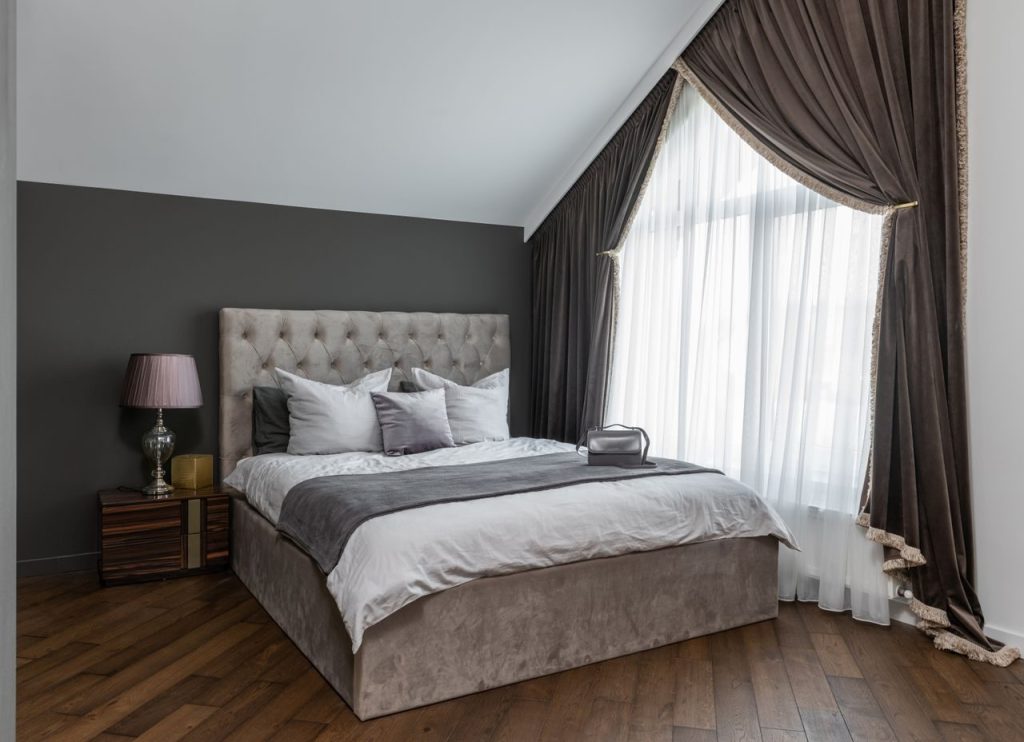
Check the operation and fit of existing curtains or blinds. Look at the edges and the way you normally open or close them. If you are comparing a replacement, measure the actual opening and read the product’s fitting requirements. A broad promise about darkness does not tell you how a particular item will work with your window, installation method or need to use that opening safely.
Make the controls understandable
Consider where someone is when they need to operate a light. A control that is convenient from the doorway may be awkward from the bed. Describe that movement before adding another device or extension. The arrangement should let the user identify the relevant switch and reach it through an accessible route. Additional controls are useful when their purpose is clear and their operation remains manageable.
Explain a changed arrangement to the people sharing the room. Agree which light is used for a late return or an early departure, and where a regular task such as dressing will happen. Keep the agreement short enough to remember. The most elaborate lighting system is not necessarily the easiest one to use when someone simply needs to locate an ordinary item without searching through several settings.
Compare features you can check
When considering equipment, read its dimensions, installation requirements, controls and care information. Check compatibility where the manufacturer requires it, rather than assuming that components can be combined because they look similar. Include the space needed for a base, cable or mounting arrangement. A product photograph may show a clean surface while leaving out the practical details that matter in your room.
Separate those features from broader sleep claims. An adjustable control or a particular fitting is a describable product feature; a promise about how every person will sleep is a different proposition. Decide which feature answers your practical question and what remains uncertain. Keep the product reference and the relevant instructions together so that the eventual setup does not depend on remembering a brief marketing description.
Review the room in everyday use
After a practical change, check the task you intended to improve. Can the person read comfortably in the chosen place, find the right control and move through the room without avoidable difficulty? Ask the other occupant whether the arrangement works for them too. These observations provide a useful review without requiring a judgement about the cause of every good or difficult night that follows.
Keep individual sleep concerns separate from the lighting purchase. If an ongoing problem is affecting daily life, seek appropriate healthcare advice. For room planning, retain the arrangement that makes an identified task easier and revise anything that has created a new obstacle. Thoughtful lighting is a matter of sources, direction, access and communication, with product choices following the needs of the people who use the space.