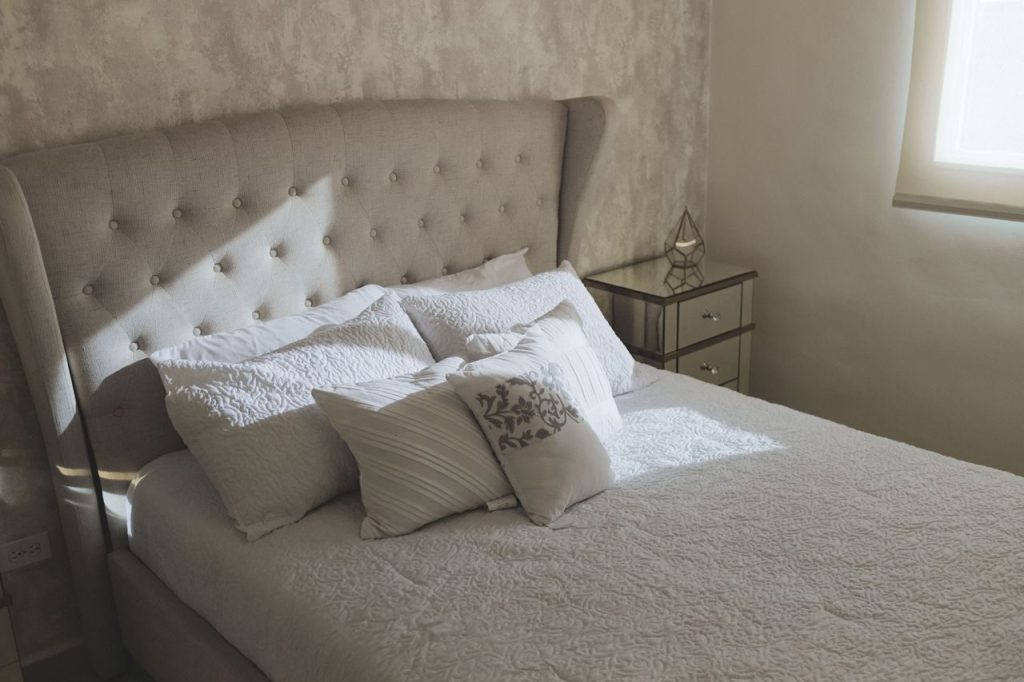
Small adult bedrooms often leave limited space beside the bed, so nightstand placement decisions directly influence how easily daily items can be reached without standing up. Many people place objects according to habit rather than testing actual reach from a seated or lying position, which leads to repeated stretching or forgotten items. Checking distances with a simple arm extension test before finalising layout prevents these issues from becoming routine.
Another frequent oversight involves treating the nightstand surface as a permanent display rather than a functional zone that changes with evening needs. Items that seem useful in the morning may block access once the light is off. Reassessing the top layer each week keeps the arrangement practical rather than decorative.
Testing Reach Before Final Placement
Begin by sitting on the edge of the mattress in the usual sleeping position and extending one arm to the proposed nightstand spot. Note any strain in the shoulder or wrist. If the surface sits more than 30 centimetres beyond comfortable reach, shift the unit closer or choose a narrower model. Repeat the test from both sides of the bed when two people share the room.
Measure the height of the mattress surface against the nightstand top. A difference greater than 5 centimetres often forces awkward wrist angles when retrieving glasses or a book. Adjustable legs or a simple riser board can correct minor mismatches without replacing the furniture.
Avoiding Surface Overcrowding
Limit the nightstand top to three regularly used items at most. Adding a fourth object usually forces stacking, which hides smaller pieces and increases the chance of knocking something over in low light. Keep a short list on paper of what actually gets used after dark and remove anything absent from that list for two consecutive weeks.
Use a shallow tray or mat to define the active zone. The tray edges give a tactile boundary that reduces items sliding off during quick grabs. Choose a tray that matches the nightstand width so it does not overhang and create new trip hazards.
Managing Cables from the First Arrangement
Route charging cables through a small grommet or clip at the back of the nightstand before placing any device on top. Leaving cables loose across the surface creates loops that catch on clothing or bedding when moving around the room. Shorten excess length with a Velcro tie rather than coiling it on the floor where feet may catch it.
Check that the cable path does not cross the walking route between bed and door. If the only socket sits on the far wall, consider a short extension lead with a flat plug that tucks under the nightstand base. Test the full route while walking normally to confirm no tension points develop.
Aligning Items with Actual Evening Sequence
Write down the order of actions performed in the last ten minutes before sleep for three nights. Place the first item used nearest the bed edge and the last item furthest back. This order often differs from the layout chosen on moving-in day. Adjust positions once the sequence is recorded rather than guessing.
Separate items needed only in the morning from those required at night. A small drawer or under-bed box can hold the morning group, freeing surface space. Label the drawer with a single word so the distinction remains clear after several weeks.
Reviewing Less-Used Storage Options
Items used once a week or less belong in a bedside caddy hung from the bed frame or in a wall pocket rather than on the nightstand. This reduces visual clutter and keeps the main surface clear for immediate needs. Check the caddy attachment points monthly to ensure fabric loops have not stretched.
When wall space allows, a narrow floating shelf above the nightstand can hold reference books or spare batteries. Keep the shelf depth under 15 centimetres so it does not create a head-bump hazard when standing beside the bed.
Checking Stability After Changes
After any rearrangement, push gently on each corner of the nightstand while the bed is occupied. Wobble that moves the unit more than a centimetre indicates the need for non-slip pads under the feet. These pads also protect flooring when the unit is occasionally pulled forward for cleaning.
Re-test stability after adding any new accessory such as a clip-on lamp. Extra weight on one side can tilt an otherwise steady piece. Move heavier objects to the centre or opposite side until balance returns.
Adjusting the Layout Over Time
Seasonal changes in clothing or routines often alter which items sit beside the bed. Schedule a five-minute review at the start of each month rather than waiting for frustration to build. Remove anything that has not been touched since the previous check and note its new storage location on the back of the door.
Keep a spare notepad in the top drawer for quick notes during these reviews. Recording what was moved and why helps identify patterns, such as seasonal shifts in reading material or device charging needs, without relying on memory alone.